Thermowood vs British Larch: Which Timber Cladding Is Right for Your Project?
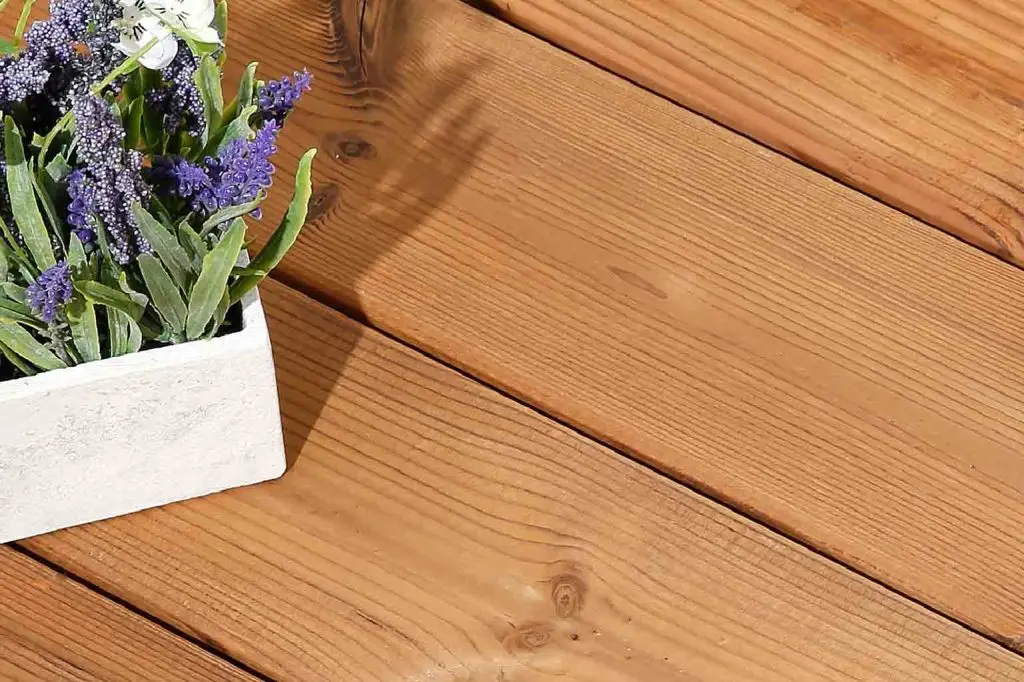
Two increasingly popular exterior timber cladding choices in the UK are thermowood and British larch. Both weather beautifully to silver-grey, both perform well in the UK climate, and both appeal to architects and self-builders who want a natural timber look without the maintenance burden of painted softwood.
But they’re not interchangeable. They suit different projects, different budgets, and different priorities. This guide breaks down the key differences so you can make the right call.
At a Glance
| Thermowood | British Larch | |
| Durability class (EN 350) | Class 1–2 | Class 3–4 (heartwood) |
| Dimensional stability | Excellent | Moderate–Good |
| Treatment type | Thermal modification | Naturally durable |
| Chemical-free | Yes | Yes |
| Weathering colour | Silver-grey | Silver-grey |
| Initial colour | Warm amber-brown | Pale golden-yellow |
| Carbon footprint | Low (Nordic supply) | Very low (UK-grown) |
| Cost | ££–£££ | ££ |
| Best for | Contemporary builds, eco projects | Low-carbon, characterful cladding |
What Is Thermowood?
Thermowood is a softwood that has been permanently modified using high-temperature steam treatment at 185–230°C. This process breaks down the hemicellulose in the wood’s cell walls, reducing moisture absorption and removing the food source that rot-causing fungi depend on. The result is a timber with durability class 1-2, comparable to tropical hardwoods like teak, without any chemical treatment.
The thermal modification process also gives thermowood its distinctive deep amber-brown colour throughout the full cross-section of the board, not just on the surface.
Read our full Thermowood guide
What Is British Larch?
British larch is also commonly known as European larch (Larix decidua) or Japanese larch (Larix kaempferi). It is a home-grown softwood with a long history of use in construction, cladding, and estate fencing. Planted extensively across Scotland, Wales, and northern England from the 18th century onwards, it is one of the most widely available UK-grown structural and cladding timbers.
British larch heartwood achieves durability class 3-4 under EN 350, making it suitable for most above-ground exterior cladding applications without treatment. It is less resin-rich than its Siberian counterpart, which means it is slightly less dense and can be more variable in appearance but this also makes it easier to work and finish.
As a UK-grown species, British larch carries a significantly lower transport carbon footprint than imported timbers. For projects with a strong sustainability brief or a preference for domestic supply chains, it is a compelling choice.
Durability: How Do They Compare?
Thermowood holds a measurable edge on paper. Durability class 1-2 (thermowood) outperforms class 3-4 (British larch heartwood) on the EN 350 scale. British larch is generally considered slightly less durable than Siberian larch due to lower resin content and density.
In practice, for standard exterior cladding installations in the UK either horizontal or vertical boards on a ventilated rainscreen system, above damp-proof course level, both timbers perform adequately. Neither requires preservative treatment in its heartwood form.
Where thermowood’s superior durability becomes more meaningful:
- High-exposure locations: coastal sites, north-facing elevations, areas of persistent shade or moisture
- Ground-adjacent details: sill trims, base boards close to soil or paving where water splash is a factor
- Tight-jointed profiles: where boards are in close contact and drying is slower
- Higher-specification projects: where longevity guarantees or durability class documentation is required
For standard ventilated cladding in typical UK conditions, both are workable choices but thermowood offers more confidence in challenging exposures.
Dimensional Stability: A Key Difference
This is arguably thermowood’s most significant practical advantage over British larch.
All timber absorbs and releases moisture as humidity changes, causing it to expand and contract. In cladding, this can lead to boards cupping, gapping, or in extreme cases splitting at fixings. British larch, being less resin-dense than Siberian larch, can be more prone to moisture movement, particularly in the wetter western and northern regions of the UK.
Thermowood’s modified cell structure reduces moisture absorption by up to 50%, meaning it moves significantly less across seasons.
What this means for specification:
- Tight-jointed profiles: (tongue and groove, shadow gap) Thermowood’s stability is particularly beneficial; British larch is better suited to profiles with built-in movement tolerance
- Open-jointed profiles: (rainscreen, featheredge with gaps) Here British larch performs well, as the profile accommodates movement naturally
- Decking: Thermowood’s stability is a real advantage here; British larch decking may require wider initial board gaps to accommodate seasonal movement
Appearance: Initial Look and Weathering
Both timbers weather to a similar silver-grey if left unfinished outdoors, but they start from noticeably different places.
British larch installs with a pale golden-yellow colour (lighter and less intense than Siberian larch) with a varied grain and knot structure. The sapwood can be quite pale and should ideally be excluded from cladding specifications (specify heartwood-only or “heartwood and bright sapwood” grades where available). It weathers progressively to grey over 12–24 months, sometimes with a more uneven transition than Siberian larch due to the greater variation between heartwood and sapwood colouring.
Thermowood installs with a consistent, even amber-brown tone throughout the board. The heat treatment evens out colour variation and reduces the prominence of knots, giving it a more uniform, contemporary appearance. It weathers to silver-grey, but from a darker starting point, so the transition is gradual and even.
Which looks better?
For a rural building, barn conversion, or project on a farm estate where British larch has historical precedent and local character, the home-grown option has genuine authenticity. For a contemporary new build or garden room where a clean, even facade is the goal, thermowood’s consistency is a clear advantage.
Both can be oiled or stained to slow weathering and maintain their initial colour. Both are frequently left unfinished by design.
Cost
British larch is typically the more affordable option. It is UK-grown, widely available from domestic sawmills, and avoids international freight costs. Thermowood commands a premium because of the energy-intensive modification process.
The cost difference varies by grade, profile, and supplier, but thermowood cladding typically runs 25 – 40% more per m² than equivalent British larch profiles. That gap is wider than the equivalent comparison with Siberian larch, reflecting the competitive pricing of UK-grown timber.
For budget-conscious projects eg agricultural buildings, rural outbuildings, and self-builds, British larch offers very strong value. For projects where thermowood’s specific advantages genuinely matter, the premium is justifiable.
Environmental Credentials
This is an area where the comparison is nuanced, and both timbers have a strong story.
British larch has the lowest possible transport carbon footprint since it is UK-grown, UK-sawn, and supplied domestically. It comes from forests that are part of the UK’s active commercial forestry sector, which is generally well-managed under the UK Forestry Standard. For projects with an explicit requirement for UK-grown or low-transport-miles timber, it is the clear choice.
Thermowood is typically produced from fast-growing Nordic pine and spruce sustainably certified, chemical-free, and produced without preservatives. The modification process does consume energy, but the outcome being a long-lasting, class 1 – 2 durability timber, reduces the whole-life environmental cost compared to shorter-lived alternatives.
If the sustainability brief centres on UK supply chains and transport miles, British larch wins. If it centres on chemical-free credentials and whole-life durability, thermowood is the stronger specification.
Which Should You Choose?
Choose thermowood if:
- You are specifying for a contemporary architectural project where a clean, even appearance matters
- The installation involves tight-jointed profiles (tongue and groove, shadow gap)
- The project is in a high-exposure or high-moisture location
- Chemical-free credentials are a project or client requirement
- You want maximum dimensional stability particularly for decking. Discover our Thermowood Decking options here
Choose British larch if:
- You want a genuinely UK-grown, low-transport-miles timber
- The project is rural, agricultural, or on a traditional estate where local character matters
- The project uses open-jointed profiles (rainscreen, featheredge) that accommodate natural movement
- Budget is a primary consideration
Both Thermowood & British Larch works well for:
- Standard ventilated external cladding in typical UK conditions
- Garden rooms, home offices, and outbuildings
- Projects specifying natural, uncoated, weathering finishes
Still Not Sure?
Our team specifies timber cladding for projects across the UK every day. If you’d like a recommendation for your specific project whether that’s a sample, a technical spec, or a quote – get in touch and we’ll help you make the right call.
Stay Updated
Get the latest timber guides, tips, and inspiration delivered to your inbox.
Newsletter
You Might Also Like
View All Posts
What Is Thermowood? The Complete Guide to Thermally Modified Timber